Permanent and Stationary Evaluation of Vision
Permanent and stationary (P&S), the workers' compensation equivalent of maximal medical improvement (MMI), means a condition has stabilized: it is neither expected to improve materially with further treatment nor to deteriorate in the near term, so permanent impairment can be measured and rated. In eye claims, the timing of that determination is often as consequential as the rating itself, because vision after injury frequently changes for months, and rating too early captures a temporary state rather than a permanent one.
Why P&S Timing Is the Threshold Question
Every downstream element of a permanent disability claim, the whole person impairment rating, apportionment, future care, is measured as of the P&S date. If vision is still improving when the rating is taken, the worker is over-rated; if a delayed complication is still evolving, under-rated. Neither error is harmless: both invite supplemental reports, re-evaluation, and disputes that a correctly timed evaluation would have avoided. The medical-legal question is therefore not just what does the examination show but is this examination measuring a stable system.
When Vision Has, and Has Not, Stabilized
Some ophthalmic findings stabilize quickly. A superficial corneal abrasion heals in days; a resolved photokeratitis leaves a normal cornea; an eye with a completed, uncomplicated course after minor trauma may fairly be P&S within weeks. Other situations are predictably unstable, and declaring them stationary is a medical error:
- Pending surgery. A traumatic cataract awaiting phacoemulsification with intraocular lens implantation can convert an eye from severe acuity loss to near-normal vision. Rating before a planned, reasonable surgery measures the cataract, not the permanent outcome. Conversely, if the worker declines surgery, the evaluator must address the condition as it stands and explain the treatment declined.
- A healing cornea. Corneal wounds and chemical injuries remodel for months; scars contract and clear, irregular astigmatism shifts, and best-corrected acuity can change substantially across a year. Serial refractions showing stability are better evidence of P&S than any single visit.
- Fluctuating retinal disease. Macular edema waxes and wanes with treatment; diabetic retinopathy progresses independently of any injury. An eye receiving ongoing injections or active retinal treatment is generally not stationary, and OCT (optical coherence tomography) provides the objective serial measurements that show whether the retina has settled.
- Delayed complications still in window. Angle-recession glaucoma after blunt trauma may emerge long after the injury. This does not indefinitely postpone P&S, the condition can be stationary with a future-care provision for pressure monitoring, but the report must recognize the risk explicitly.
Key point: P&S is demonstrated, not declared. Serial measurements, stable refractions, stable OCT, stable fields across visits, are the evidence that a visual system has reached its plateau.
How an Evaluator Documents the Determination
A sound P&S opinion in an eye claim rests on trend data: sequential best-corrected visual acuity measurements, serial OCT imaging, repeated visual fields where field loss is at issue, and the treating course (has active treatment ended, or reached maintenance?). The report should state the P&S date, the evidence of stability supporting it, and any conditions that could reopen the picture, typically handled through future medical care provisions rather than by leaving the claim unrated. Where the condition is not yet stationary, the useful report says what milestone will mark stability (completed surgery, three stable refractions, resolution of edema) and a reasonable re-evaluation interval.
Honest Limits
Stability is a probabilistic judgment. A cornea can scar unexpectedly late; a retina quiet for a year can decompensate; and no evaluator can promise a condition will never change. P&S means stability within reasonable medical probability, with foreseeable risks assigned to future care, not a warranty. Reports that overstate certainty in either direction serve no party well under deposition, and the interaction between P&S findings and impairment is covered on the whole person impairment page.
What to Provide
Chronologically complete eye records are essential, because the P&S determination is fundamentally longitudinal. Provide every visit note with measured acuity, all serial OCT and field printouts, operative reports and dates, and current treatment status. Counsel disputing a P&S date, in either direction, are best served by identifying the specific measurements they contend show ongoing change or established stability. Dr. Shomer addresses P&S determinations in QME and AME evaluations and in record-review consultation on disputed ratings.
Frequently Asked Questions
What does permanent and stationary mean in an eye claim?
Permanent and stationary (P&S), equivalent to maximal medical improvement, means the eye condition has plateaued, it is not expected to improve materially with further treatment or to change in the near term, so permanent impairment can be measured and rated. It is demonstrated by stable serial measurements, not simply the passage of time.
Can an eye be rated P&S before cataract surgery?
Generally it should not be, when surgery is planned and reasonable, because phacoemulsification with lens implantation can dramatically change visual outcome and the rating would capture a temporary state. If the worker declines surgery, the evaluator rates the eye as it stands and documents the declined treatment and its expected effect.
How long until vision stabilizes after a corneal injury?
Corneal wounds and chemical injuries remodel for months, and best-corrected vision can shift for a year or more as scars mature and astigmatism changes. Serial stable refractions are the practical evidence of stability; a single measurement cannot establish it.
Does the risk of late glaucoma prevent a P&S finding?
Not necessarily. An eye with angle recession can be permanent and stationary while the report provides future medical care for periodic pressure monitoring. The delayed risk is handled prospectively through future care rather than by leaving the claim indefinitely unrated.
Educational information only. This page provides general information for attorneys and other medical-legal professionals. It is not medical or legal advice, does not address any particular case, and does not create a physician-patient, attorney-client, or expert-client relationship. Opinions in any matter are formed only after review of the specific records, examination findings, and applicable literature. Past engagements do not guarantee any result.
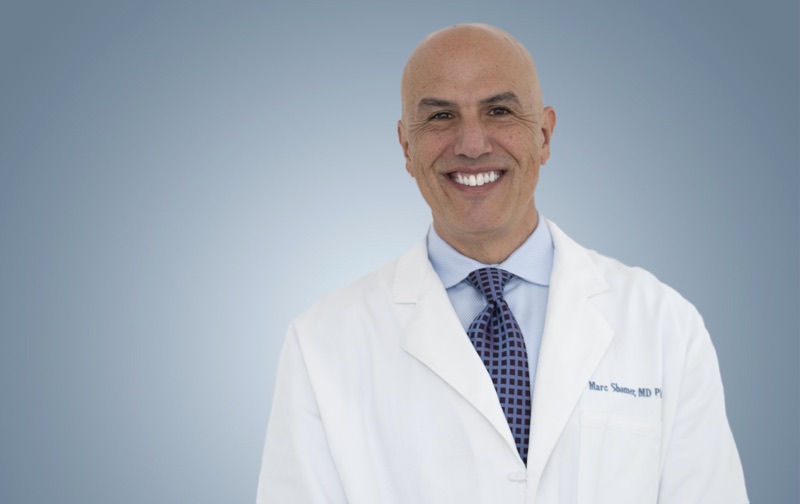
Board-certified ophthalmologist; Adjunct Associate Professor of Ophthalmology, Keck School of Medicine of USC; active California Qualified Medical Evaluator. Full biography · Curriculum vitae
Published August 2, 2026 · Last substantive review August 2, 2026 · Medical reviewer: Marc H. Shomer, MD, PhD, QME
Request a Conflict Check and Case Review
Submit the matter for conflict screening. Please do not send medical records or protected health information until conflicts are cleared and secure transfer instructions are provided.