Refractive Surgery Expert Witness
A refractive surgery expert witness evaluates claims arising from the full range of vision-correction procedures: not only LASIK but PRK, SMILE, implantable collamer lenses (ICL) and other phakic intraocular lenses, and refractive lens exchange. Each procedure carries a distinct risk profile, and the standard of care includes matching the procedure to the eye: many disputes begin with the choice of operation, not its execution.
Dr. Marc H. Shomer, a board-certified comprehensive ophthalmologist consulting on medical-legal matters for more than 13 years, reviews refractive surgery claims for plaintiff and defense counsel nationwide.
The Landscape Beyond LASIK
All refractive procedures are elective operations on functioning eyes, which raises the stakes for candidate selection and informed consent across the board. But the procedures differ in mechanism and risk, and an expert opinion must be procedure-specific. LASIK itself is addressed in depth on the LASIK expert witness page; this page covers the alternatives and the recurring question of whether the right operation was chosen.
The Procedures and Their Distinct Risk Profiles
- PRK (photorefractive keratectomy) reshapes the corneal surface without a flap. It avoids flap complications and preserves more structural tissue, often the appropriate choice for thinner corneas, but involves a slower, more painful recovery and a risk of corneal haze. Claims commonly involve postoperative pain management, delayed epithelial healing, infection during the healing window, and haze after high corrections.
- SMILE (small incision lenticule extraction) removes a shaped disc of tissue through a small incision, without a LASIK-style flap. Litigation issues include lenticule extraction difficulties, retained tissue fragments, and the more limited options for retreatment.
- ICL and phakic IOLs place a lens inside the eye without removing the natural lens, typically for high myopia beyond laser range. Because these are intraocular procedures, the risk profile shifts: cataract formation from lens contact, elevated intraocular pressure, endothelial cell loss (progressive depletion of the corneal cells that keep the cornea clear), and sizing errors causing an improperly vaulted implant. Postoperative surveillance, pressure checks, endothelial cell counts, vault assessment, is itself a standard-of-care subject.
- Refractive lens exchange (RLE) is cataract-style surgery performed on a clear lens for refractive purposes. It carries the intraocular risks of cataract surgery, including endophthalmitis and, in highly myopic eyes, retinal detachment, plus the loss of natural focusing in younger patients. Because the eye starts healthy and often highly functional, consent for RLE deserves particular scrutiny; the surgical analysis overlaps with the cataract surgery and IOL complications pages.
Procedure Selection as a Standard-of-Care Question
A recurring allegation is not that a procedure was done badly, but that a different procedure, or none, was indicated: laser ablation performed on a cornea better suited to an ICL; RLE offered where the refractive goal was achievable with less invasive means; surface ablation withheld where a thin cornea made LASIK marginal. The record should show that alternatives were considered and discussed. Consent forms that mention only the chosen procedure, with no documented discussion of alternatives, are a frequent weak point.
Records Commonly Reviewed
Corneal topography and tomography, pachymetry, anterior-segment measurements (for ICL sizing), refraction history, the consent packet including alternatives discussion, device printouts, operative notes, and postoperative surveillance records, especially endothelial cell counts and pressure measurements for phakic IOL patients. A structured medical record review with a chronology is often the right starting point in multi-procedure histories.
Causation, Uncertainty, and Honest Limits
Refractive patients sometimes undergo more than one procedure over the years, and attributing a corneal or intraocular finding to a specific operation requires care. Some outcomes, regression of effect, mild haze, dry eye, occur after properly chosen and properly performed surgery. An honest evaluation identifies which findings are objective, which explanations the record supports, and where the evidence simply does not permit attribution.
What Attorneys Should Provide
Complete records from every refractive procedure and provider, all imaging in image form, prior optometric records, and subsequent-treater records. For ICL matters, include the sizing calculations and postoperative endothelial cell counts; for RLE, the biometry and lens verification records, as in any cataract matter. See what records to provide for a general checklist.
Frequently Asked Questions
How does PRK differ from LASIK in litigation?
PRK has no flap, so flap-related claims disappear, but the healing surface creates different issues: postoperative pain, delayed epithelial healing, infection risk during the healing window, and corneal haze. PRK is also often the safer choice for thinner corneas, so some claims allege LASIK was chosen where PRK was indicated.
What complications drive ICL and phakic IOL claims?
The main ones are cataract formation from contact with the natural lens, elevated intraocular pressure, progressive endothelial cell loss, and sizing errors leaving the implant improperly vaulted. Because several of these develop over time, adequacy of postoperative surveillance is often as important as the original surgery.
Is refractive lens exchange held to a different consent standard than cataract surgery?
The operation is essentially cataract surgery on a clear lens, but because the eye is healthy and the procedure purely elective, the consent discussion carries more weight. Disclosure of retinal detachment risk in high myopia, loss of natural focusing in younger patients, and available alternatives is closely examined.
Educational information only. This page provides general information for attorneys and other medical-legal professionals. It is not medical or legal advice, does not address any particular case, and does not create a physician-patient, attorney-client, or expert-client relationship. Opinions in any matter are formed only after review of the specific records, examination findings, and applicable literature. Past engagements do not guarantee any result.
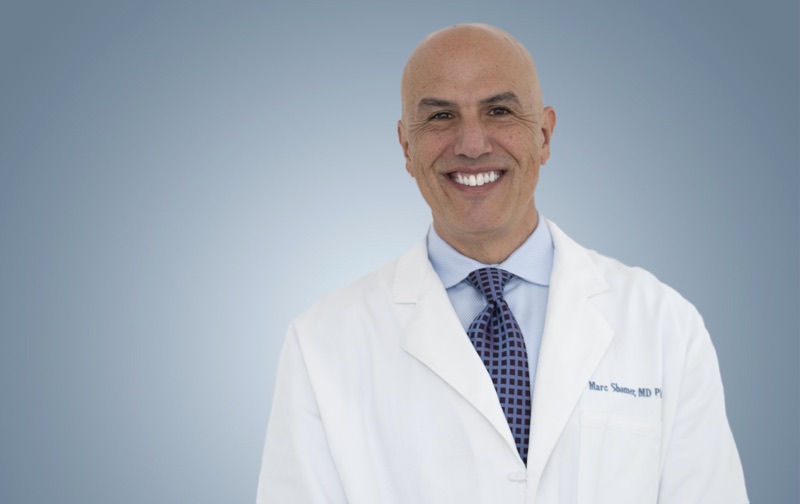
Board-certified ophthalmologist; Adjunct Associate Professor of Ophthalmology, Keck School of Medicine of USC; active California Qualified Medical Evaluator. Full biography · Curriculum vitae
Published August 2, 2026 · Last substantive review August 2, 2026 · Medical reviewer: Marc H. Shomer, MD, PhD, QME
Request a Conflict Check and Case Review
Submit the matter for conflict screening. Please do not send medical records or protected health information until conflicts are cleared and secure transfer instructions are provided.