Ocular Trauma Expert Witness
An ocular trauma expert witness is an ophthalmologist who evaluates eye injuries in litigation: what the trauma did to the eye, whether the claimed visual loss is actually attributable to the incident, how the injury was evaluated and treated, and what permanent impairment resulted. Eye trauma cases span personal injury, workers' compensation, premises liability, product liability, and criminal matters, and the causation question, did this incident cause this visual loss?, is frequently the heart of the dispute.
Marc H. Shomer, MD, PhD, QME, is a board-certified ophthalmologist with more than 13 years of medical-legal experience, including trauma evaluations as a California Qualified Medical Evaluator. He consults nationwide on records and examines in person by arrangement.
The Questions Trauma Cases Present
Most ocular trauma matters raise some combination of four questions. What injury occurred, mechanically and anatomically? Was the initial evaluation and treatment appropriate? Is the current visual deficit caused by the incident, in whole or in part? And what is the permanent impairment? The first and second are medical-record questions; the third is a causation analysis, treated in depth on the causation expert page and on loss of vision after trauma; the fourth becomes central in damages and workers' compensation contexts.
Mechanisms and Common Settings
Eye injuries arrive from characteristic settings, each with characteristic mechanics: assaults (fists and objects producing blunt force), motor vehicle collisions (airbag deployment, glass, dashboard impact), workplace incidents (projectiles from grinding and hammering, chemical splashes, falls), sports (balls and elbows sized to fit the orbit), and falls in premises and elder-care contexts. The mechanism constrains the plausible injuries: a small high-velocity metal fragment from hammering metal on metal raises concern for a penetrating injury with a retained foreign body, while a fist produces blunt compressive injury. An expert reads the claimed mechanism against the documented findings for consistency.
Closed Globe Versus Open Globe
Trauma classification begins with one distinction. In a closed-globe injury, the eye wall is intact: the spectrum runs from surface abrasions through hyphema (blood in the front chamber), traumatic cataract, and retinal injury. In an open-globe injury, the wall of the eye is breached by laceration or rupture, a surgical emergency with generally graver prognosis. The distinction drives everything downstream: treatment urgency, infection risk, and expected outcomes. Blunt mechanisms are addressed in detail on the blunt eye trauma page and open-globe injuries on the penetrating eye injury page; chemical exposures, a distinct category, on the chemical eye injury page.
Documentation That Matters
The most valuable records are usually the earliest: emergency department notes recording presenting visual acuity, pupil reactions, and pressure; the first ophthalmology consultation; imaging (CT for suspected foreign body or fracture); operative reports for any repair; and photographs. Presenting visual acuity is both a prognostic marker and a baseline against which later claims are measured, its absence from early records is a recurring problem for both sides. Pre-incident records matter just as much: prior optometry and ophthalmology charts establish what the eye could see before the event. A medical record chronology that aligns pre- and post-incident findings is often the most clarifying single document in a trauma case.
Causation: The Central Dispute
Eyes carry their history with them. Pre-existing amblyopia (a lazy eye from childhood), glaucoma, diabetic retinopathy, or macular disease can account for part or all of a measured deficit, and some traumatic consequences, angle-recession glaucoma, for example, emerge years after the injury, complicating the timeline in the other direction. Objective testing helps: OCT (optical coherence tomography, cross-sectional retinal imaging) can show structural damage or its absence, and pupil testing and electrophysiology can corroborate or undercut subjective complaints. An honest causation opinion apportions between traumatic and non-traumatic contributions when the record permits, and says plainly when it does not.
What Attorneys Should Provide
Emergency and first-responder records, all ophthalmology records with imaging in image form, operative reports, pre-incident eye records going back years, incident documentation (photographs, scene reports, the object involved if known), and employment or activity records where relevant to exposure. The attorney checklist for eye injury cases collects these items in one place.
Frequently Asked Questions
What does an ocular trauma expert witness evaluate?
Four things, typically: the nature and mechanism of the eye injury, the appropriateness of the initial evaluation and treatment, whether the claimed visual loss is causally attributable to the incident versus pre-existing disease, and the resulting permanent impairment. Not every case raises all four.
Why is presenting visual acuity so important in eye trauma cases?
Visual acuity documented at first evaluation is one of the strongest prognostic indicators after eye trauma and serves as the baseline against which recovery and later claims are measured. When early records omit it, both proving and defending the extent of injury becomes harder.
Can an eye injury cause problems years after the trauma?
Yes. Certain blunt-trauma sequelae, notably glaucoma following angle recession, can develop years or decades later. This is why long-term follow-up records matter and why a late-arising condition is not automatically unrelated to an old injury, the anatomy documented after the original trauma is key.
Does Dr. Shomer examine injured claimants or only review records?
Both. Record-based consultation is available nationwide, and in-person examinations are likewise available nationwide by arrangement. He also serves as a California Qualified Medical Evaluator for workers' compensation eye injuries.
Educational information only. This page provides general information for attorneys and other medical-legal professionals. It is not medical or legal advice, does not address any particular case, and does not create a physician-patient, attorney-client, or expert-client relationship. Opinions in any matter are formed only after review of the specific records, examination findings, and applicable literature. Past engagements do not guarantee any result.
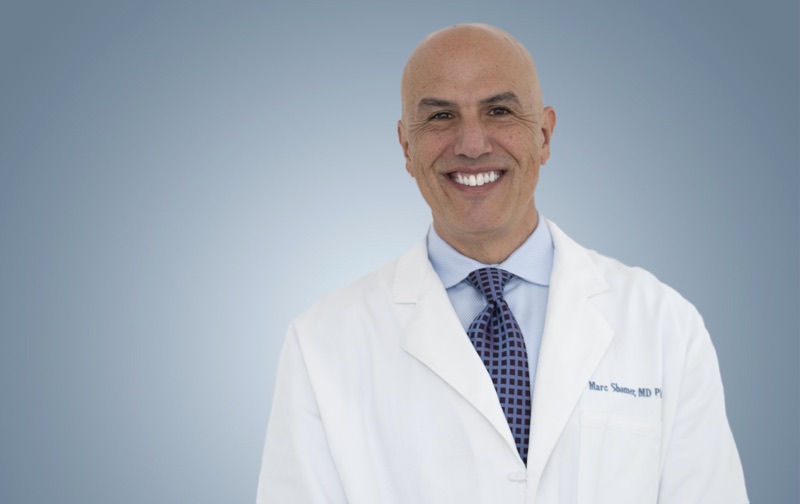
Board-certified ophthalmologist; Adjunct Associate Professor of Ophthalmology, Keck School of Medicine of USC; active California Qualified Medical Evaluator. Full biography · Curriculum vitae
Published August 2, 2026 · Last substantive review August 2, 2026 · Medical reviewer: Marc H. Shomer, MD, PhD, QME
Request a Conflict Check and Case Review
Submit the matter for conflict screening. Please do not send medical records or protected health information until conflicts are cleared and secure transfer instructions are provided.