Ophthalmology Expert Witness: Frequently Asked Questions
These are the questions attorneys, insurers, and claims professionals most often ask before retaining an ophthalmology expert witness. Each answer is written to stand on its own. For questions specific to California workers' compensation evaluations, see the separate QME FAQs.
Common Questions From Counsel
The answers below reflect general medical-legal practice. They explain concepts; they are not legal advice, and procedural questions should be directed to counsel.
Frequently Asked Questions
What does an ophthalmology expert witness do?
An ophthalmology expert witness reviews medical records, imaging, and case materials involving the eye and visual system, forms independent opinions on questions such as standard of care, causation, and visual impairment, and communicates those opinions in written reports and testimony. The work spans medical malpractice, personal injury, workers' compensation, disability, and product liability matters.
Does Dr. Shomer work for plaintiffs or for the defense?
Both. Dr. Shomer accepts engagements from plaintiff and defense counsel alike, and the analysis is the same regardless of who retains him: the records and objective testing determine the opinion. Experts whose opinions do not vary with the retaining party tend to hold up better under cross-examination.
What is a conflict check and why does it come first?
A conflict check screens the parties, treating providers, facilities, and opposing counsel against the expert's prior engagements and treatment relationships before any substantive case discussion. It comes first because a conflict discovered after records have been shared can disqualify the expert and compromise the work already done.
How are expert opinions formed?
Opinions are built from the complete medical record, native-format diagnostic imaging, the scientific literature, and, where an examination is performed, direct clinical findings. Each opinion is reasoned from evidence to conclusion, considers alternative explanations, and is held to a reasonable degree of medical probability. Opinions that cannot be supported are not offered.
Will the expert actually testify, or only write reports?
Dr. Shomer provides deposition and courtroom testimony in addition to written reports, and has done so for more than 13 years. Whether testimony is anticipated should be stated in the engagement, since testifying and consulting roles carry different disclosure consequences. See deposition and trial testimony.
Can the review be done remotely, or is an in-person examination required?
Record and imaging review is performed remotely for matters nationwide, and many questions, standard of care, record-based causation, imaging interpretation, can be fully addressed that way. In-person examinations, when needed, are available nationwide by arrangement. See nationwide record review.
How quickly can a review begin?
A review can begin as soon as the conflict check clears and records are received; the conflict check itself typically requires only party and provider names. Overall turnaround depends on record volume and whether imaging must be obtained in native format, so early engagement gives the most scheduling flexibility ahead of disclosure deadlines.
What makes ophthalmology cases different from other medical-legal cases?
The eye is unusually measurable. Objective tests, optical coherence tomography (OCT), fundus photography, automated visual fields, and electrophysiology, document structure and function in ways few other organ systems allow. This means ophthalmic claims can often be verified or contradicted with objective data rather than resting on symptom reports alone.
What are the fees?
A fee schedule is provided on request together with the proposed engagement terms, before any commitment is made. Fees are not contingent on the outcome of the matter, which preserves the independence of the opinions.
What is the difference between a consulting expert and a testifying expert?
A consulting expert advises counsel confidentially and is generally not disclosed to the other side; the work is typically protected from discovery. A testifying expert is disclosed, produces discoverable reports, and gives sworn testimony. The same physician can serve either role, but the role should be fixed at engagement.
Is Dr. Shomer still in clinical practice?
Yes. Dr. Shomer has maintained a comprehensive ophthalmology practice in Upland, California since 2010, alongside medical-legal work spanning more than 13 years. Active clinical practice matters in expert work because standard-of-care opinions carry more weight when they come from a physician who currently does what the case is about.
What credentials should attorneys look for in an ophthalmology expert?
Board certification by the American Board of Ophthalmology, active clinical practice, academic appointment, and experience producing reports and testimony that survive scrutiny. Dr. Shomer is board-certified (2011, recertified 2021), holds MD and PhD degrees from UCLA, trained at the Jules Stein Eye Institute, serves as Adjunct Associate Professor of Ophthalmology at the Keck School of Medicine of USC, and is an active California Qualified Medical Evaluator.
Educational information only. This page provides general information for attorneys and other medical-legal professionals. It is not medical or legal advice, does not address any particular case, and does not create a physician-patient, attorney-client, or expert-client relationship. Opinions in any matter are formed only after review of the specific records, examination findings, and applicable literature. Past engagements do not guarantee any result.
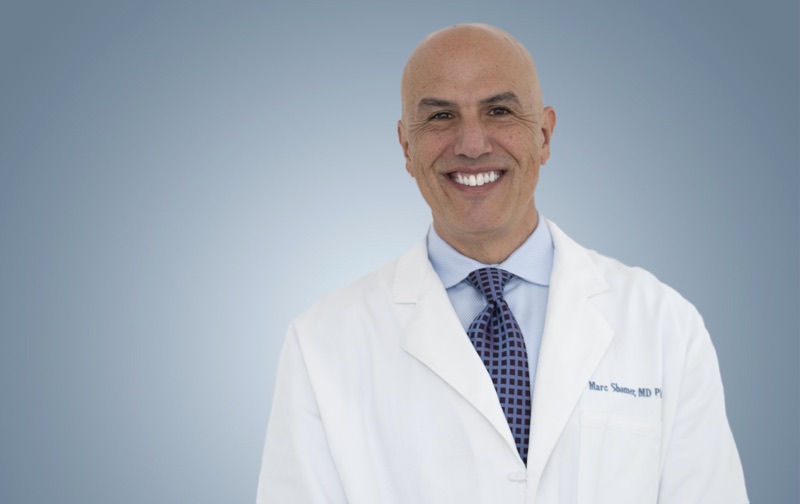
Board-certified ophthalmologist; Adjunct Associate Professor of Ophthalmology, Keck School of Medicine of USC; active California Qualified Medical Evaluator. Full biography · Curriculum vitae
Published August 2, 2026 · Last substantive review August 2, 2026 · Medical reviewer: Marc H. Shomer, MD, PhD, QME
Request a Conflict Check and Case Review
Submit the matter for conflict screening. Please do not send medical records or protected health information until conflicts are cleared and secure transfer instructions are provided.