QME Frequently Asked Questions
These are the questions attorneys, adjusters, and injured workers most often ask about the Qualified Medical Evaluator process in California workers' compensation, answered from the evaluator's side of the table. The answers explain medical-legal concepts generally; they are not legal advice, and procedural questions in a specific case belong with counsel or the Division of Workers' Compensation. For the ophthalmology-specific evaluation process, see the ophthalmology QME page.
Dr. Shomer is an active California QME in ophthalmology; his background is summarized on the California QME ophthalmologist page and his curriculum vitae. Questions about the independent medical examinations he performs outside the workers' compensation system are covered in the companion IME FAQ.
Frequently Asked Questions
What is a QME?
A Qualified Medical Evaluator is a physician appointed by the Administrative Director of the California Division of Workers' Compensation to evaluate disputed medical issues in workers' compensation claims. Under Labor Code §139.2, appointment requires passing a state competency examination and meeting education requirements, and QMEs must seek reappointment every two years with continuing education. It is a state-issued designation that many expert witnesses do not hold.
What is the difference between a QME, an AME, and an IME?
A QME is a state-appointed evaluator selected through the DWC panel process. An AME (Agreed Medical Evaluator) is a physician both parties in a represented case stipulate to instead of using the panel: a role, not a credential, whose opinions carry particular weight because both sides chose the evaluator. An IME (independent medical examination) is the general term for a non-treating physician's evaluation, used in personal injury, disability, and liability matters outside the workers' compensation panel system.
Who pays for a QME evaluation?
The claims administrator (the employer's insurer or third-party administrator) pays for the medical-legal evaluation under the state's medical-legal fee schedule. The injured worker does not pay for a panel QME evaluation. Fee disputes between evaluators and administrators are resolved through administrative processes that do not involve the worker.
How is a QME panel selected?
The DWC Medical Unit issues a randomly generated panel of three QMEs in the appropriate specialty, ophthalmology for eye disputes. In unrepresented cases, the injured worker picks one of the three and schedules the appointment. In represented cases, each side may strike one name, and the remaining physician performs the evaluation. Parties in represented cases may instead bypass the panel by agreeing on an AME.
What should the injured worker bring to the evaluation?
Current glasses and contact lenses, since best-corrected vision is a central measurement in an eye evaluation; a list of medications including eye drops; and any items the appointment notice requests. Records are ordinarily provided by the parties in advance under the rules governing what may be sent to a QME, rather than hand-carried.
How long does the QME report take?
The written report is generally due within thirty days of the examination, with limited extensions available for good cause, such as outstanding test results or records received late. Supplemental reports responding to additional questions or new records are subject to their own shorter deadlines under the regulations.
Can attorneys communicate with a QME?
Only within strict limits. Ex parte communication, one party communicating with the QME without the other, is prohibited, and a violation can entitle the aggrieved party to terminate the evaluation and obtain a new evaluator. Written communications and records sent to the QME must generally be served on the opposing party in advance. The safe practice is simple: nothing goes to the evaluator that the other side has not seen.
What happens if a party disagrees with the QME report?
The primary tools are a request for a supplemental report addressing specific objections, new records, or claimed factual errors, and a deposition of the QME, where counsel examines the evaluator under oath on the report's reasoning. In represented cases the parties may also agree to an AME. Whether a report can be excluded or a replacement evaluator obtained is a legal question governed by the regulations and case law.
Can a QME report be challenged for being late or incomplete?
Procedural defects such as untimeliness can, in some circumstances, give a party rights up to and including a replacement panel, and substantive incompleteness, failure to address required elements such as causation or apportionment with reasoning, is a standard basis for supplemental report requests. The remedies available in a particular case are for counsel to assess.
Does the QME decide whether the worker gets benefits?
No. The QME provides medical opinions: diagnosis, causation, permanent and stationary status, impairment, apportionment, future care, work restrictions. How those opinions translate into benefits is determined by the parties' resolution or by a workers' compensation judge. The evaluator has no stake in, and no authority over, the legal outcome.
Why does it matter that the QME is an ophthalmologist for an eye claim?
Because the disputed evidence is specialty-specific: interpreting OCT scans, automated visual fields, and gonioscopy findings, and knowing the natural course of conditions such as traumatic cataract and angle-recession glaucoma. Panels are issued by specialty so that eye disputes are evaluated by physicians trained in exactly this evidence.
Is the QME the injured worker's doctor?
No. The QME evaluates and reports but does not treat, and no physician-patient treatment relationship is formed. Treatment remains with the worker's own physicians within the workers' compensation medical system. This site is a resource for attorneys and claims professionals, not a patient portal.
Authorities Cited
Primary sources referenced on this page. Links open the official text on the publishing agency’s site.
Educational information only. This page provides general information for attorneys and other medical-legal professionals. It is not medical or legal advice, does not address any particular case, and does not create a physician-patient, attorney-client, or expert-client relationship. Opinions in any matter are formed only after review of the specific records, examination findings, and applicable literature. Past engagements do not guarantee any result.
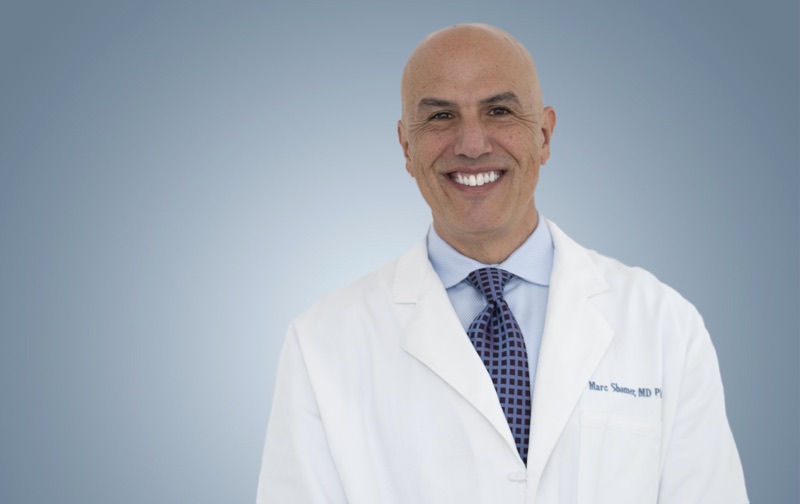
Board-certified ophthalmologist; Adjunct Associate Professor of Ophthalmology, Keck School of Medicine of USC; active California Qualified Medical Evaluator. Full biography · Curriculum vitae
Published August 2, 2026 · Last substantive review August 2, 2026 · Medical reviewer: Marc H. Shomer, MD, PhD, QME
Request a Conflict Check and Case Review
Submit the matter for conflict screening. Please do not send medical records or protected health information until conflicts are cleared and secure transfer instructions are provided.