What the QME Designation Actually Means, and Why It Matters
The letters QME after a physician's name denote a specific, state-issued distinction: appointment by the Administrative Director of the California Division of Workers' Compensation as a Qualified Medical Evaluator, earned by examination and maintained through continuing education and periodic reappointment under Labor Code section 139.2. It is not a courtesy title, and it is not something a physician can simply claim. Many capable expert witnesses do not hold it, which is precisely why it is worth understanding what the designation requires and what it signals.
A Statutory Appointment, Not a Self-Description
Anyone with a medical license can call themselves an expert witness; whether they qualify in a given case is decided ad hoc, by a judge, at the moment of trial. The QME designation works differently. Labor Code section 139.2 directs the Administrative Director of the California Division of Workers' Compensation (DWC) to appoint Qualified Medical Evaluators, and it sets statutory prerequisites for appointment. The physician must hold an appropriate license and, for medical doctors, be board certified in their specialty or meet equivalent criteria; must complete required education in disability evaluation report writing; and must pass a competency examination administered under the statute before appointment.
The result is a defined, verifiable status. A physician either appears on the DWC's roster of active QMEs or does not. There is no gray zone of self-designation, and attorneys can confirm the status directly rather than taking a curriculum vitae's word for it.
The Competency Examination
The QME competency examination tests what evaluators actually have to do: apply the medical-legal framework of the California workers' compensation system. That includes the concepts that decide cases: permanent and stationary status, whole person impairment under the AMA Guides to the Evaluation of Permanent Impairment, 5th Edition, apportionment of disability to its causes under Labor Code sections 4663 and 4664, and the report standards that make an evaluation admissible and useful. Clinical excellence alone does not confer this knowledge. A superb surgeon who has never worked inside the workers' compensation system would find the examination unfamiliar terrain, because it tests a body of medical-legal law and method layered on top of medicine.
This is the first thing the designation signals: the physician has demonstrated, under examination conditions, command of the legal framework their reports must serve, not merely the medicine those reports describe.
Reappointment and Continuing Education: The Designation Expires
Perhaps the most underappreciated feature of the QME system is that the designation is not permanent. QMEs are subject to reappointment every two years, and reappointment requires ongoing continuing education in disability evaluation and related subjects. A physician who lets the requirements lapse loses the designation. Holding an active QME appointment therefore means something a static credential cannot: the evaluator has stayed current, cycle after cycle, with a system that changes: new regulations, evolving case law on apportionment, updated report requirements.
Compare this to the general expert witness world, where nothing compels an expert to refresh their medical-legal knowledge, ever. The QME framework builds in the refresh.
Accountability: Reports Written Under Regulation
QME reports are not free-form. Regulations govern their timelines, required elements, and disclosure obligations, and the reports are routinely scrutinized by both sides of represented cases, by judges at the Workers' Compensation Appeals Board, and by the DWC itself. Evaluators whose reports fall short face real consequences within the system, up to loss of the designation. Years of writing reports inside that structure instill habits that carry over to every other kind of medical-legal work: answer the questions asked, show the reasoning, address apportionment and alternative causes explicitly, and document what was reviewed. A rigorous QME report and a rigorous civil expert report share the same skeleton, as discussed in Anatomy of an Ophthalmic Medical-Legal Report.
What the Designation Signals in a Non-QME Case
Most matters in which an ophthalmology expert is retained, personal injury, malpractice, disability, product liability, are not workers' compensation cases, and the QME designation is not required for any of them. So why does it matter there? Because it is independent evidence of three things attorneys otherwise must take on faith: that a state authority examined the physician's competence in medical-legal evaluation and appointed them; that the physician has maintained that status through continuing education and reappointment; and that the physician's reports have been produced for years inside a regulated system where both sides, and judges, read them critically.
When opposing counsel probes an expert's qualifications at deposition, "the State of California examined and appointed me as a medical-legal evaluator, and appointed me as a Qualified Medical Evaluator after examination" is a categorically different answer than "I have reviewed cases before."
The Designation in Practice
Dr. Shomer is an active California QME and maintains the designation alongside board certification by the American Board of Ophthalmology and a comprehensive ophthalmology practice in Upland, California. Within the workers' compensation system, he performs ophthalmology QME evaluations addressing permanent and stationary status, impairment, and apportionment; when both parties agree on the evaluator, he is available to serve as an Agreed Medical Evaluator, a role a QME may take on, not a separate credential. Outside workers' compensation, the same evaluation discipline informs expert witness work in civil matters nationwide.
The Bottom Line for Attorneys
Credentials are proxies for reliability, and some proxies are stronger than others. Board certification tells you a physician mastered a specialty. An active QME designation tells you something further: a state examined their ability to translate medicine into legally usable findings, and keeps re-examining it every two years. When the dispute in your case turns on exactly that translation, impairment, causation, apportionment, functional capacity, the distinction is worth weighing at retention.
Frequently Asked Questions
What is a QME in California?
A Qualified Medical Evaluator is a physician appointed by the Administrative Director of the California Division of Workers' Compensation to perform medical-legal evaluations in workers' compensation cases. Appointment under Labor Code section 139.2 requires passing a competency examination and meeting education requirements, and the designation must be renewed through reappointment every two years.
Is QME a permanent credential?
No. QMEs are subject to reappointment every two years and must complete required continuing education to remain on the roster. An active QME designation therefore indicates current, maintained competence in medical-legal evaluation rather than a one-time achievement.
Does the QME designation matter outside workers' compensation?
The designation is only required for California workers' compensation evaluations, but it signals independently verified medical-legal competence: a state-administered examination, mandatory continuing education, and years of reports produced under regulatory scrutiny. Those qualities transfer directly to personal injury, malpractice, and disability matters.
Is an AME a higher credential than a QME?
An AME (Agreed Medical Evaluator) is not a credential at all, it is a role. When both sides of a represented workers' compensation case agree to use a particular physician, that physician serves as the AME for the case. The designation the physician holds is QME; serving as AME reflects the parties' mutual confidence in that evaluator.
Authorities Cited
Primary sources referenced on this page. Links open the official text on the publishing agency’s site.
Educational information only. This page provides general information for attorneys and other medical-legal professionals. It is not medical or legal advice, does not address any particular case, and does not create a physician-patient, attorney-client, or expert-client relationship. Opinions in any matter are formed only after review of the specific records, examination findings, and applicable literature. Past engagements do not guarantee any result.
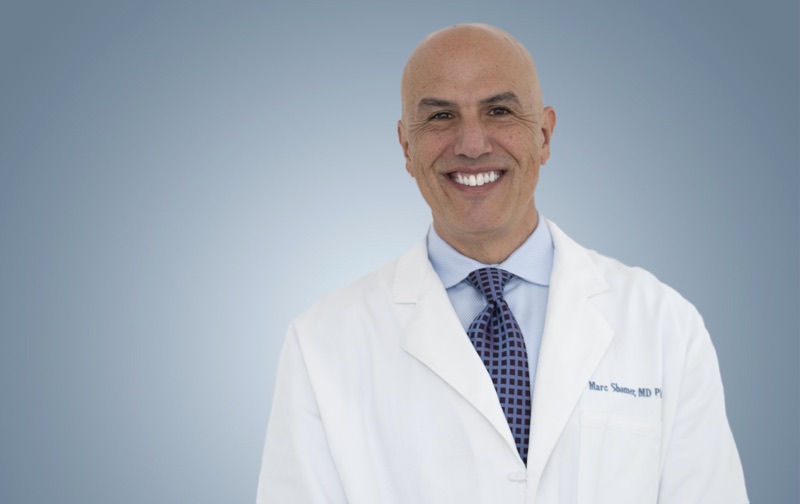
Board-certified ophthalmologist; Adjunct Associate Professor of Ophthalmology, Keck School of Medicine of USC; active California Qualified Medical Evaluator. Full biography · Curriculum vitae
Published August 2, 2026 · Last substantive review August 2, 2026 · Medical reviewer: Marc H. Shomer, MD, PhD, QME
Request a Conflict Check and Case Review
Submit the matter for conflict screening. Please do not send medical records or protected health information until conflicts are cleared and secure transfer instructions are provided.