Glaucoma Expert Witness
A glaucoma expert witness evaluates whether glaucoma was diagnosed and monitored within the standard of care and whether documented vision loss is attributable to a lapse in care, the disease's own course, or unrelated factors. Marc H. Shomer, MD, PhD, QME, a board-certified comprehensive ophthalmologist in practice since 2010, reviews glaucoma matters for plaintiff and defense counsel nationwide.
Glaucoma litigation is shaped by one clinical fact: the common forms of the disease are painless and symptom-free until damage is advanced, so the entire burden of detection falls on examination and testing, which makes the adequacy of monitoring the central legal question.
What Glaucoma Is and Why It Litigates Differently
Glaucoma is a group of diseases in which the optic nerve, the cable carrying visual signals to the brain, is progressively damaged, usually in association with elevated intraocular pressure (IOP). Peripheral vision is lost first, slowly, and the brain fills in the gaps, so patients typically notice nothing until late. Lost nerve tissue does not regenerate. Unlike an acute event with a date, chronic glaucoma damage accrues over years, which complicates both causation and apportionment when a lapse in care is alleged.
Common Litigation Themes
- Missed or delayed diagnosis: elevated pressures, suspicious optic nerve appearance, or abnormal tests documented but not pursued.
- Monitoring adequacy: whether IOP checks, automated visual fields (typically Humphrey perimetry), and OCT (optical coherence tomography) scans of the retinal nerve fiber layer were performed at reasonable intervals and whether progression on those tests prompted treatment escalation.
- Angle-closure emergencies: acute angle closure causes pain, blurred vision, and very high pressure and can destroy vision within days; claims involve missed diagnoses in urgent care settings and failure to perform gonioscopy (a mirrored-lens exam of the eye's drainage angle) in at-risk patients.
- Steroid-induced glaucoma, corticosteroids by any route can raise IOP in susceptible patients; claims typically allege prolonged steroid prescribing without pressure monitoring.
- Surgical complications: recognized risks of trabeculectomy, tube shunts, and minimally invasive glaucoma surgery, and whether they were managed appropriately.
Records and Testing an Expert Reviews
The glaucoma chart is data-rich: serial IOP measurements, gonioscopy findings, central corneal thickness, optic disc photographs, OCT nerve fiber layer analyses with progression software, and serial visual fields with reliability indices. Reviewing the actual printouts rather than summary impressions matters, because progression is often visible in the trend data before it is acknowledged in the narrative. The primer on understanding visual fields explains how these tests are read.
Causation and Apportionment in a Slow Disease
Because glaucomatous loss accrues gradually, the key causation question is usually: how much of the final deficit developed during the period of allegedly substandard care, and how much preceded it or would have occurred despite proper treatment? Serial fields and OCT often permit a reasoned answer. The same structure serves apportionment in California workers' compensation, where Labor Code sections 4663 and 4664 require permanent disability to be apportioned to its causes, including non-industrial disease, an analysis discussed on the apportionment page. Honest opinions also acknowledge that a minority of patients progress despite excellent pressure control, and that normal-tension glaucoma can advance without the elevated IOP that triggers suspicion.
Limitations of the Evaluation
Visual fields are effort-dependent and vary test to test; a single bad field proves little, which is why progression analysis relies on trends across multiple reliable tests. Where a chart contains few fields or scans, the reconstruction of when damage occurred becomes correspondingly uncertain, and the report should say so. Standard-of-care questions are matter-specific and follow the approach described on the standard of care page.
What Attorneys Should Provide
All ophthalmology and optometry records with the actual visual field printouts, OCT reports, and disc photographs; pharmacy records (for steroid exposure and drop adherence questions); and records predating the alleged lapse to establish baseline damage. For disability valuation, the resulting field loss feeds the analysis described under whole person impairment for vision.
Frequently Asked Questions
Why do glaucoma cases so often involve delayed diagnosis?
Because common forms of glaucoma cause no pain and no noticeable symptoms until optic nerve damage is advanced. Detection depends entirely on examination findings and testing, intraocular pressure, optic nerve appearance, visual fields, and OCT, so the legal analysis focuses on whether those tests were done, read correctly, and acted upon.
Can an expert tell when glaucoma damage occurred?
Often approximately, if serial testing exists. Visual fields and OCT nerve fiber layer scans taken over time show whether damage was present, stable, or progressing at each interval, allowing a reasoned estimate of what portion of the loss developed during a disputed period. Sparse testing widens the uncertainty, and a credible report acknowledges that.
Is steroid-induced glaucoma the prescriber's fault?
Not automatically. Corticosteroids are appropriate treatment for many conditions, and pressure elevation occurs only in susceptible patients. The standard-of-care question is usually whether prolonged steroid use was accompanied by reasonable pressure monitoring and whether an elevation, once documented, was addressed, not whether steroids were prescribed at all.
How is glaucoma vision loss apportioned in workers' compensation?
California law requires permanent disability to be apportioned to its causes, including non-industrial disease. Because glaucoma usually predates and progresses independently of any industrial event, serial visual fields and OCT scans are used to separate pre-existing and naturally progressing loss from any portion attributable to the injury or to industrial factors.
Authorities Cited
Primary sources referenced on this page. Links open the official text on the publishing agency’s site.
Educational information only. This page provides general information for attorneys and other medical-legal professionals. It is not medical or legal advice, does not address any particular case, and does not create a physician-patient, attorney-client, or expert-client relationship. Opinions in any matter are formed only after review of the specific records, examination findings, and applicable literature. Past engagements do not guarantee any result.
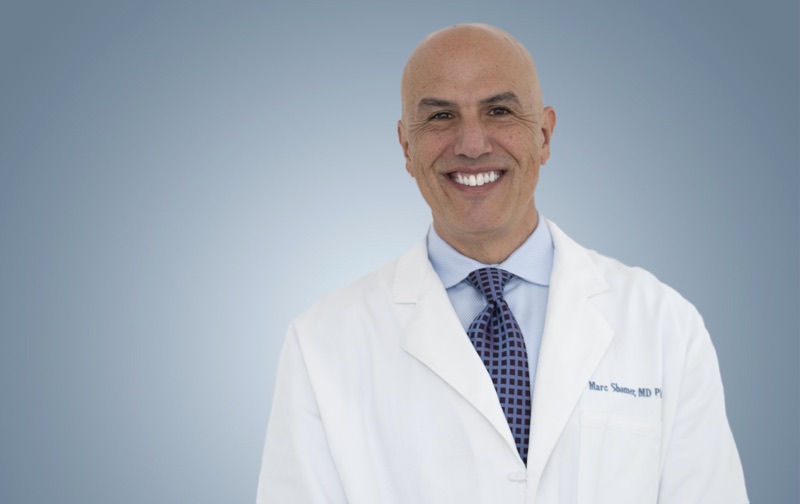
Board-certified ophthalmologist; Adjunct Associate Professor of Ophthalmology, Keck School of Medicine of USC; active California Qualified Medical Evaluator. Full biography · Curriculum vitae
Published August 2, 2026 · Last substantive review August 2, 2026 · Medical reviewer: Marc H. Shomer, MD, PhD, QME
Request a Conflict Check and Case Review
Submit the matter for conflict screening. Please do not send medical records or protected health information until conflicts are cleared and secure transfer instructions are provided.