Eye Injuries in the Workers' Compensation System
A workers' compensation eye injury is an injury to the eye or visual system arising out of and in the course of employment, from momentary corneal foreign bodies to open-globe trauma with permanent vision loss, handled through a claims process in which disputed medical questions are resolved by a Qualified Medical Evaluator (QME) or an Agreed Medical Evaluator (AME). This page maps how eye claims move through the California system and where the medical-legal evaluation fits.
How Industrial Eye Injuries Arise
Eyes are small targets with outsized consequences. Construction, manufacturing, agriculture, custodial work, and food service generate most claims, through a handful of recurring mechanisms: flying particles from grinding and hammering, chemical splash from cleaners and cements, blunt impact from tools and materials, ultraviolet flash from welding, and, less commonly, penetrating injury. The clinical patterns and how an evaluator approaches each are detailed on the eye injury QME page. Two features distinguish eye claims from most orthopedic claims: much of the evidence is objective and measurable, and even modest permanent visual loss can carry significant disability significance because vision is central to nearly every job.
The Pathway of a Claim
In broad outline, a California eye claim proceeds through familiar stages:
- Report and claim. The worker reports the injury to the employer and files a claim form; the employer routes it to its insurer or administrator.
- Treatment. Care proceeds through the applicable medical provider network. Acute eye injuries, chemical splash, suspected open globe, retained foreign body, are treated emergently, and those first records become the backbone of any later medical-legal analysis.
- Dispute. Disagreements commonly arise over whether the condition is industrial, whether the worker has reached permanent and stationary status, the degree of permanent impairment, apportionment to pre-existing disease, and what future care is owed.
- Medical-legal evaluation. Disputed medical questions go to a QME selected through the state panel process or, in represented cases where the parties agree, to an AME. The evaluation and required report elements are described on the ophthalmology QME page.
- Resolution. The medical-legal report becomes the medical evidence around which the parties settle or litigate before the Workers' Compensation Appeals Board.
Why Specialty Matters in Eye Claims
Vision disputes turn on specialty-specific evidence: interpretation of optical coherence tomography (OCT, objective retinal imaging), automated visual fields, gonioscopy (examination of the eye's internal drainage angle, essential after blunt trauma), and the expected natural course of conditions like traumatic cataract and angle-recession glaucoma. Panels for eye claims are issued in ophthalmology for this reason, and the evaluator's task is as much interpretive as observational: deciding whether the documented findings fit the claimed mechanism and whether residual complaints are supported by objective structure and function.
The Recurring Medical Disputes
- Causation. Did the incident cause the condition, or reveal pre-existing disease? A worker who notices blur after a minor abrasion may be discovering a cataract that predated the injury.
- Permanent and stationary timing. Declaring an eye claim P&S too early, before a cataract is addressed or a cornea has stabilized, distorts the permanent impairment picture; see the P&S page.
- Impairment rating. Vision impairment is rated under the AMA Guides 5th Edition visual system chapter, combining acuity and field loss into whole person impairment.
- Apportionment. Labor Code §§4663-4664 require the evaluator to divide permanent disability between industrial and non-industrial causes: frequently the hardest question in eye claims with pre-existing cataract, glaucoma, or diabetic retinopathy.
- Future medical care. Drops, surveillance for delayed glaucoma, possible surgery, addressed on the future care page.
Key point: In eye claims the acute records and any pre-injury eye examinations are decisive documents. They establish mechanism and baseline, the two anchors of causation and apportionment analysis.
What the System Cannot Get from Medicine
An evaluator can measure what is, and reason carefully about what was and what will be, but cannot conjure a baseline that was never recorded, and should not disguise estimation as certainty. Where the record does not permit a confident answer, the sound report explains what additional records or time would resolve, and what remains genuinely indeterminate. Legal questions, benefit entitlement, penalties, employment status, belong to counsel and the Appeals Board.
For Attorneys and Claims Professionals
Whether applicant or defense, the useful preparation is the same: secure the day-of-injury records, subpoena prior optometry and ophthalmology records for baseline, obtain actual test printouts, and frame the disputed issues precisely. Dr. Shomer, an active California QME in ophthalmology, evaluates these claims as a panel QME and as an AME when the parties select him.
Frequently Asked Questions
What happens when a work eye injury claim is disputed?
Disputed medical questions, causation, permanent and stationary status, impairment, apportionment, future care, are referred to a Qualified Medical Evaluator selected through the state panel process, or to an Agreed Medical Evaluator if both parties in a represented case stipulate to one. The evaluator's written report becomes the central medical evidence.
Why are pre-injury eye records so important?
Because they establish baseline vision. Many disputed claims involve pre-existing conditions such as cataract, glaucoma, or diabetic retinopathy, and apportionment under Labor Code §§4663-4664 requires separating industrial from non-industrial causes. A documented pre-injury examination converts that analysis from estimation to evidence.
Are eye claims evaluated by ophthalmologists?
Generally yes. QME panels are issued by specialty, and vision disputes require specialty interpretation of tests such as OCT, automated visual fields, and gonioscopy. An ophthalmology panel is the ordinary route for a disputed eye claim in California.
Can a minor eye injury still produce a valid permanent impairment claim?
Sometimes. Most superficial injuries heal without measurable deficit, but a scar in the visual axis, traumatic iris damage causing glare, or an injury that precipitates angle-recession glaucoma can leave rateable impairment. The question is always what objective examination and testing document, case by case.
Authorities Cited
Primary sources referenced on this page. Links open the official text on the publishing agency’s site.
Educational information only. This page provides general information for attorneys and other medical-legal professionals. It is not medical or legal advice, does not address any particular case, and does not create a physician-patient, attorney-client, or expert-client relationship. Opinions in any matter are formed only after review of the specific records, examination findings, and applicable literature. Past engagements do not guarantee any result.
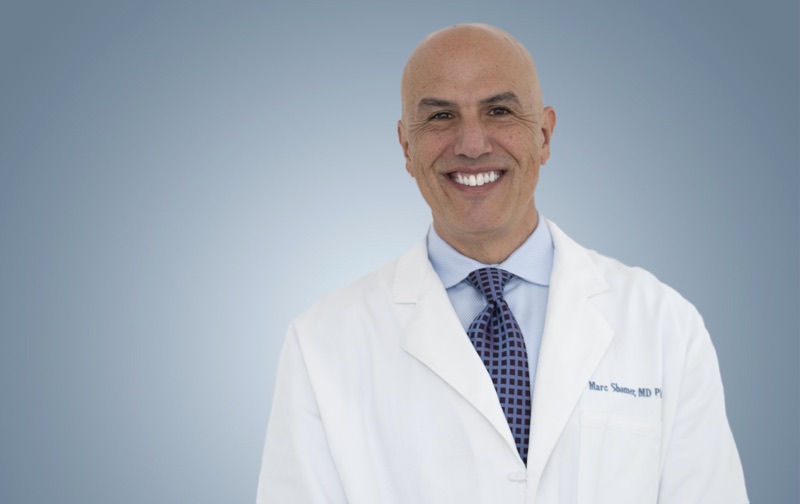
Board-certified ophthalmologist; Adjunct Associate Professor of Ophthalmology, Keck School of Medicine of USC; active California Qualified Medical Evaluator. Full biography · Curriculum vitae
Published August 2, 2026 · Last substantive review August 2, 2026 · Medical reviewer: Marc H. Shomer, MD, PhD, QME
Request a Conflict Check and Case Review
Submit the matter for conflict screening. Please do not send medical records or protected health information until conflicts are cleared and secure transfer instructions are provided.