Macular Disease Expert Witness
A macular disease expert witness evaluates claims involving the macula, the small central retina responsible for reading, driving, and face recognition, including age-related macular degeneration (AMD), macular holes, epiretinal membrane, and central serous chorioretinopathy. Marc H. Shomer, MD, PhD, QME, a board-certified ophthalmologist, reviews these matters for plaintiff and defense counsel nationwide.
Because even small macular lesions can be visually devastating, and because modern treatment is delivered on tight schedules, macular cases frequently raise questions of monitoring intervals and treatment timing.
The Medical-Legal Question in Macular Cases
The macula is only a few millimeters across, yet it carries most of what patients and juries mean by "vision." The recurring legal questions are whether macular disease was detected when it should have been, whether treatment and monitoring followed accepted intervals, and how much of the final acuity reflects the natural course of the disease rather than any delay. Optical coherence tomography (OCT), a cross-sectional retinal scan performed at nearly every retina visit, makes the macula one of the best-documented structures in medicine, which gives these cases an unusually objective evidentiary base.
Age-Related Macular Degeneration and Anti-VEGF Timing
AMD occurs in a dry (atrophic) form, which usually progresses slowly, and a wet (neovascular) form, in which abnormal vessels leak fluid and blood under the macula. Wet AMD is treated with intravitreal injections of anti-VEGF (anti-vascular endothelial growth factor) medication, typically on recurring schedules guided by OCT findings. Litigation themes include delayed recognition of conversion from dry to wet disease, gaps between injections during active leakage, monitoring of the fellow eye in a patient who has lost one eye to AMD, and follow-up systems for patients who miss appointments. The counter-considerations are equally real: wet AMD can destroy central vision quickly despite fully appropriate care, dry AMD progresses without any currently reversible treatment for most patients, and missed visits are sometimes attributable to the patient rather than the practice.
Macular Holes, Epiretinal Membrane, and Central Serous
A macular hole is a full-thickness defect in the central retina, usually repaired by vitrectomy; duration and hole size influence surgical prognosis, so diagnostic delay can matter. An epiretinal membrane is a sheet of scar tissue on the macular surface causing distortion; it typically progresses slowly, and surgery is elective, which limits many delay theories. Central serous chorioretinopathy involves fluid accumulation under the macula, often in younger patients and classically associated with corticosteroid exposure; it frequently resolves without treatment, but recurrent or chronic disease can cause permanent change. Each condition has a distinct natural history, and a credible opinion matches the causation analysis to the specific diagnosis rather than treating "macular disease" as one entity.
Medication-Related Maculopathy
Drug toxicity to the macula, most prominently hydroxychloroquine maculopathy and its screening requirements, is addressed on the dedicated ocular toxicity expert witness page, since the standard-of-care questions there center on monitoring-guideline adherence across specialties.
Limitations of the Evaluation
Serial OCT allows precise reconstruction of macular anatomy over time, but anatomy and function do not correlate perfectly: some eyes see better than their scans suggest, others worse. Visual outcome projections for AMD carry genuine statistical spread, and an honest report frames them as probabilities, not certainties. Where records lack imaging or acuity data at key dates, the expert must say what cannot be determined. The frameworks on the causation and standard of care pages apply throughout.
What Attorneys Should Provide
Complete retina-specialist records including every OCT scan and angiogram in native or exported image form, the injection log with dates and medications, optometry and general ophthalmology records establishing baseline vision, and any correspondence about missed or rescheduled appointments. The guide on OCT evidence explains what these scans can show a fact-finder.
Frequently Asked Questions
What kinds of macular disease cases require an expert witness?
Common examples include allegedly delayed diagnosis of wet age-related macular degeneration, gaps in anti-VEGF injection schedules during active disease, delayed repair of macular holes, and disputes over how much vision loss stems from the underlying condition versus the timing of care. Experts are retained by both plaintiff and defense counsel in these matters.
Can delayed anti-VEGF injections cause permanent vision loss?
They can, because active leakage in wet AMD can produce scarring and photoreceptor loss that later injections cannot reverse. But wet AMD can also progress despite timely treatment, so causation requires comparing the OCT findings and acuity at each visit with the documented gaps, not simply noting that vision worsened after a delay.
Is central serous chorioretinopathy caused by steroids?
Corticosteroid exposure is a well-recognized association with central serous chorioretinopathy, and the condition also occurs without any steroid use. An expert evaluating a steroid-related claim weighs the timing, dose, and route of exposure against the disease's tendency to occur and recur spontaneously, and distinguishes association from proven causation.
Why is OCT central to macular litigation?
OCT images the macula in cross-section at each visit, creating a dated, objective record of fluid, holes, membranes, and atrophy. Serial scans let an expert show when disease appeared and how it responded to treatment, which is usually the core factual dispute in these cases.
Educational information only. This page provides general information for attorneys and other medical-legal professionals. It is not medical or legal advice, does not address any particular case, and does not create a physician-patient, attorney-client, or expert-client relationship. Opinions in any matter are formed only after review of the specific records, examination findings, and applicable literature. Past engagements do not guarantee any result.
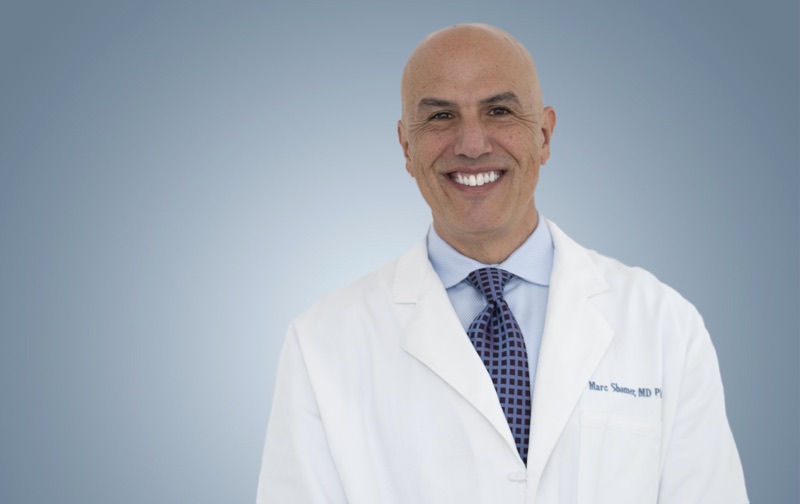
Board-certified ophthalmologist; Adjunct Associate Professor of Ophthalmology, Keck School of Medicine of USC; active California Qualified Medical Evaluator. Full biography · Curriculum vitae
Published August 2, 2026 · Last substantive review August 2, 2026 · Medical reviewer: Marc H. Shomer, MD, PhD, QME
Request a Conflict Check and Case Review
Submit the matter for conflict screening. Please do not send medical records or protected health information until conflicts are cleared and secure transfer instructions are provided.