Informed Consent in Eye Surgery Expert Witness
An informed consent expert in ophthalmology addresses whether a patient received the information a person would need before agreeing to eye surgery or an eye procedure, and whether the risk that was allegedly not disclosed is the one that caused the harm. Marc H. Shomer, MD, PhD, QME obtains consent from his own surgical patients, teaches ophthalmology at the Keck School of Medicine of USC, and reviews consent claims for plaintiff and defense counsel nationwide.
Consent claims travel with nearly every surgical malpractice case, and they are often the claim that survives when the surgery itself was performed properly. They are also frequently pleaded and thinly supported. An expert is useful on both sides of that problem.
Consent is a process, and the form is evidence of it
The Code of Ethics of the American Academy of Ophthalmology describes informed consent as "the process of shared decision-making between the ophthalmologist and the patient" that "must precede the performance of medical or surgical procedures." The American Medical Association’s Code of Medical Ethics directs the physician to assess the patient’s ability to understand, to present the diagnosis, the nature and purpose of the recommended intervention, and the burdens, risks and expected benefits of all options including forgoing treatment, and to document the conversation.
The signed form is therefore one piece of evidence about a conversation. A detailed, procedure-specific form signed days before surgery supports the defense. A generic form signed in the preoperative area minutes before the operation supports it far less. The absence of a form does not prove the conversation never took place, and a signature does not prove it was adequate.
Two legal standards, one set of medical facts
States take two broad approaches to how much must be disclosed. Some measure disclosure by what a reasonable physician would tell the patient. Others, following Canterbury v. Spence and, in California, Cobbs v. Grant, measure it by what a reasonable patient would consider material to the decision. In Cobbs the California Supreme Court stated that "the test for determining whether a potential peril must be divulged is its materiality to the patient’s decision."
Which standard governs is a legal question for counsel. Under either one, the medical facts come from the expert:
- the recognized risks of the procedure, how often they occur and how severe they are;
- the reasonable alternatives, including no surgery, and what each would have meant for this patient;
- what ophthalmologists customarily disclose for this procedure;
- whether the patient’s own eye carried added risk that should have changed the discussion; and
- whether the complication that occurred is the risk that was allegedly withheld.
Recurring consent disputes in ophthalmology
- Cataract surgery. An elective operation with a small risk of serious vision loss and a real chance of needing glasses afterward. Disputes involve patients with known added risk, such as a weak lens support system or a prior eye injury, whose consent discussion did not reflect it. See Cataract Surgery Expert Witness.
- Premium lenses. Whether halos, glare and reduced contrast were explained, and whether a conventional lens was presented as a real alternative. See Premium Intraocular Lenses.
- Laser-assisted cataract surgery. What benefit was represented for the added fee. See Laser-Assisted Cataract Surgery.
- LASIK and other refractive surgery. Surgery on a healthy eye, where dry eye, night vision symptoms and corneal weakening are the risks patients say they were not told about. See LASIK Expert Witness.
- Off-label drugs. Bevacizumab injected into the eye and mitomycin C applied during pterygium or glaucoma surgery are accepted off-label uses. Whether the off-label status was mentioned is a common allegation. See Intravitreal Injections and Pterygium Surgery.
- Who operated and who followed the patient. Participation of a resident or fellow, and postoperative care transferred to another provider. The Academy’s Code of Ethics treats postoperative care until recovery as integral to patient management.
- Language, capacity and timing. Whether an interpreter was used and documented, whether the patient had the cognitive ability to decide, and whether the form was signed after sedation had been given.
The evidence of what was said
Beyond the form, the chart may contain a note of the consent discussion, a record that an educational video or brochure was provided, interpreter documentation, and the surgical scheduling notes that show how much time separated the recommendation from the operation. Practice marketing material is relevant when the claim is that the patient was promised a result. Procedure-specific consent forms published by the Ophthalmic Mutual Insurance Company are a useful reference for the risks ophthalmologists commonly disclose. They are a liability carrier’s samples and do not define the standard of care by themselves.
Disclosure is only half the claim. In Cobbs v. Grant the court framed causation objectively: "what would a prudent person in the patient’s position have decided if adequately informed of all significant perils." A patient with a dense cataract and 20/200 vision would very likely have proceeded with full disclosure. A patient choosing an optional upgrade on a comfortable eye might not have. The expert’s account of how necessary the procedure was, and what the alternatives offered, is what gives that question content.
How Dr. Shomer approaches a consent claim
He first identifies the complication that actually occurred and asks whether it is a recognized risk of the procedure. He then compares the consent documents and chart notes with what a careful ophthalmologist discloses for that procedure and that eye, including any patient-specific risk the preoperative examination revealed. Finally he sets out the medical necessity of the procedure and the realistic alternatives, so that the question of what a prudent patient would have decided can be answered on facts. He does not offer an opinion on what a particular patient was told when the record is silent and the testimony conflicts; that is a question of credibility for the trier of fact.
Frequently Asked Questions
Is a signed consent form enough to defeat an informed consent claim?
No. The form is evidence of a conversation, and its weight depends on how specific it is, when it was signed and what else the chart shows about the discussion. A generic form signed minutes before surgery carries much less weight than a procedure-specific form supported by a chart note.
Does the surgeon have to disclose every possible risk?
No. The duty is framed in terms of risks a reasonable physician would disclose or risks that are material to a reasonable patient, depending on the state. Remote or trivial risks generally need not be listed, while serious risks such as loss of vision should be, even when uncommon.
Does the patient have to show they would have refused the procedure?
In states following Cobbs v. Grant the test is objective: what a prudent person in the patient’s position would have decided if adequately informed of all significant perils. The medical necessity of the procedure and the available alternatives are central to that question.
What does an ophthalmology expert add to a consent case?
The medical facts the legal test depends on: the recognized risks of the procedure and their frequency, the reasonable alternatives, what ophthalmologists customarily disclose, any added risk particular to the patient’s eye, and whether the complication that occurred is the risk that was allegedly not disclosed.
Authorities Cited
Primary sources referenced on this page. Links open the source on the publisher’s or agency’s site.
Educational information only. This page provides general information for attorneys and other medical-legal professionals. It is not medical or legal advice, does not address any particular case, and does not create a physician-patient, attorney-client, or expert-client relationship. Opinions in any matter are formed only after review of the specific records, examination findings, and applicable literature. Past engagements do not guarantee any result.
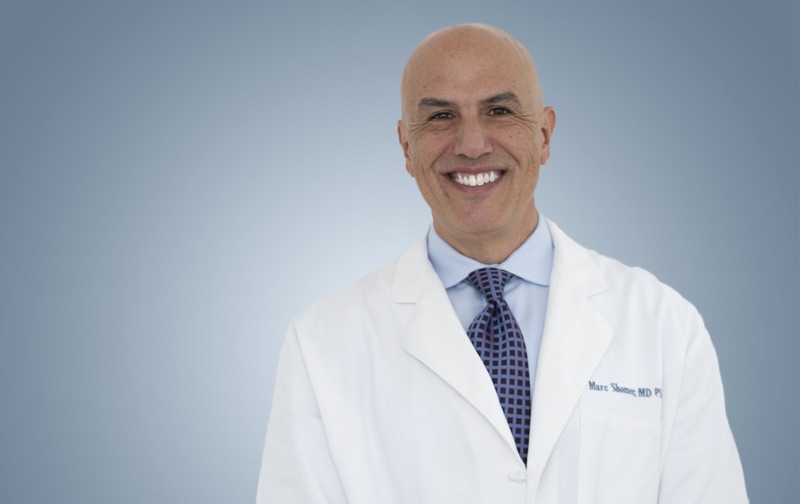
Board-certified ophthalmologist; Adjunct Associate Professor of Ophthalmology, Keck School of Medicine of USC; active California Qualified Medical Evaluator. Full biography · Curriculum vitae
Published October 5, 2026 · Last substantive review October 5, 2026 · Medical reviewer: Marc H. Shomer, MD, PhD, QME
Request a Conflict Check and Case Review
Submit the matter for conflict screening. Please do not send medical records or protected health information until conflicts are cleared and secure transfer instructions are provided.