Refractive Surprise After Cataract Surgery
A refractive surprise is a post-cataract-surgery outcome that lands meaningfully off the intended refractive target, a patient planned for distance vision without glasses who ends up substantially nearsighted or farsighted. Some surprises reflect preventable error in measurement or transcription; others reflect the honest limits of biometry, especially in unusual eyes. Distinguishing the two is the core of the expert analysis.
Dr. Marc H. Shomer, a board-certified ophthalmologist who performs cataract surgery and the biometry that precedes it, evaluates refractive-surprise claims for plaintiff and defense counsel.
The Question These Cases Ask
Every intraocular lens (IOL) power is a prediction: measurements of the eye are fed into a formula that estimates where the lens will sit and how the eye will focus. The medical-legal question is whether the miss was within the expected error of a careful process, or whether it traces to an identifiable lapse: a bad measurement accepted uncritically, the wrong formula for the eye, or the wrong lens taken off the shelf. This causation-focused framing is developed generally on the causation expert page.
Where Biometry Error Comes From
Sources of error include inaccurate axial length measurement (particularly with older ultrasound techniques or in eyes with dense cataracts), corneal curvature readings distorted by dry eye or prior surgery, formula limitations, effective-lens-position prediction (the formula's estimate of where the implant will settle, which no measurement fully controls), and simple transcription, the right calculation, the wrong lens. The record usually shows which of these is in play: implausible or asymmetric measurements should prompt remeasurement, and the standard of care includes that skepticism.
Unusual Eyes Change the Baseline
Certain eyes are known to defeat standard formulas. Post-LASIK and post-RK eyes have surgically altered corneas that standard measurements misread, historically producing hyperopic surprises; specialized formulas and methods reduce but do not eliminate the error. Very long (highly myopic) and very short (highly hyperopic) eyes sit at the edges of formula accuracy. In these patients a wider miss can be consistent with careful practice: provided the record shows the surgeon recognized the difficulty, used appropriate methods, and told the patient the target was less certain. Consent documentation of that uncertainty is often the pivotal exhibit.
Key point: The reasonableness of a refractive outcome is judged against the predictability achievable in that particular eye, not against a uniform expectation of emmetropia.
Reasonable Target Versus Outcome, and Remedies
The analysis separates three things: the chosen target (was aiming for distance, or intentional mild myopia, reasonable for this patient?), the achieved outcome (how far off, measured by stable postoperative refraction?), and the response. Remedies for a significant miss include glasses or contact lenses, corneal refractive surgery over the pseudophakic eye, a piggyback lens, or IOL exchange, each with its own risk profile, discussed further on the intraocular lens complications page. A surgeon's engagement with remedies after a miss is frequently more probative than the miss itself.
When a Miss Raises Standard-of-Care Questions
Red flags include: measurements that were internally inconsistent or grossly different between eyes without documented remeasurement; use of standard formulas in a documented post-LASIK eye without any adjustment; a mismatch between the calculation sheet and the implanted lens (a verification failure); and absence of any consent discussion of refractive uncertainty in a high-risk eye. By contrast, a modest miss in an unusual eye, with careful methods documented and the uncertainty disclosed, generally represents a known limitation rather than a deviation. The broader framework appears on the cataract surgery standard of care page.
Limits of the Analysis and What to Provide
An expert cannot recalculate what an eye "should have" received without the original data, and refraction must be stable, typically weeks after surgery, before the size of a miss is even measurable. Counsel should provide all biometry printouts (both eyes), calculation sheets, the implant record identifying the exact lens, records of any prior refractive surgery, pre- and postoperative refractions over time, and the consent documents. Understanding how acuity and refraction are recorded is covered in understanding visual acuity.
Frequently Asked Questions
What is a refractive surprise after cataract surgery?
It is a postoperative refractive result meaningfully different from the planned target, for example, a patient targeted for unaided distance vision who ends up significantly nearsighted. Small deviations are common and expected; large deviations prompt review of the biometry, formula choice, and lens verification.
Why are post-LASIK eyes prone to IOL calculation errors?
LASIK reshapes the cornea, so standard measurements of corneal power misread these eyes and standard formulas historically produced hyperopic surprises. Specialized methods reduce the error but do not eliminate it, which is why documented use of appropriate techniques and disclosure of the added uncertainty matter in these cases.
Is a missed refractive target after cataract surgery malpractice?
Often not. Biometry is a prediction with known error, and unusual eyes widen that error even with careful technique. A miss becomes a potential deviation when the record shows unreliable measurements accepted without rechecking, an inappropriate formula, or a lens that does not match the calculation, a verification failure.
Educational information only. This page provides general information for attorneys and other medical-legal professionals. It is not medical or legal advice, does not address any particular case, and does not create a physician-patient, attorney-client, or expert-client relationship. Opinions in any matter are formed only after review of the specific records, examination findings, and applicable literature. Past engagements do not guarantee any result.
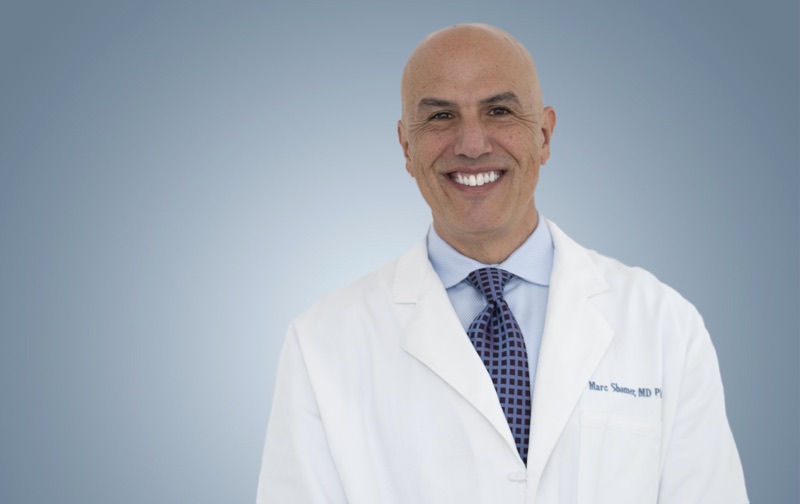
Board-certified ophthalmologist; Adjunct Associate Professor of Ophthalmology, Keck School of Medicine of USC; active California Qualified Medical Evaluator. Full biography · Curriculum vitae
Published August 2, 2026 · Last substantive review August 2, 2026 · Medical reviewer: Marc H. Shomer, MD, PhD, QME
Request a Conflict Check and Case Review
Submit the matter for conflict screening. Please do not send medical records or protected health information until conflicts are cleared and secure transfer instructions are provided.