Agreed Medical Evaluator (AME) in Ophthalmology
An Agreed Medical Evaluator (AME) is a physician that both sides of a represented California workers' compensation case, the applicant's attorney and the defense, jointly agree to use for the medical-legal evaluation, instead of proceeding through the state panel QME process. AME is a role, not a credential: it exists only when the parties confer it by agreement, and it is typically filled by an experienced QME in the relevant specialty. Marc H. Shomer, MD, PhD, QME, an active California QME in ophthalmology, is available to serve as an AME when selected by the parties.
What Makes an AME Different
In a represented case with a disputed medical issue, the default path is a three-physician QME panel from which each side strikes one name. The alternative is agreement: the two sides identify a physician they both trust and stipulate to that physician as the Agreed Medical Evaluator. Nothing about the examination itself changes: an ophthalmic AME evaluation involves the same history, comprehensive examination, objective testing, and report elements as a panel QME evaluation. What changes is the standing of the opinion.
Why AME Opinions Carry Weight
AME findings carry significant weight for a structural reason: both sides chose the evaluator. Neither party can later dismiss the report as the product of an examiner slanted toward the other side, because each side had a veto at the selection stage. Workers' compensation judges accordingly give AME reports substantial deference, and in practice an AME opinion frequently becomes the medical framework within which the case resolves. That does not make the AME's word final, the parties retain the tools of supplemental report requests and deposition, but it raises the practical bar for displacing the opinion.
This weight cuts both ways for the evaluator. An AME who drifts toward either side stops being agreed to. The role therefore selects for physicians whose reports are consistent, well-reasoned, and indifferent to which party benefits, the same qualities that make any medical-legal opinion durable under cross-examination.
When Parties Choose an AME
Parties tend to agree on an AME when:
- The medical issues are complex or high-value, and both sides want a specialist whose competence they have confidence in rather than a random panel draw.
- The specialty is narrow. Ophthalmology panels are smaller than orthopedic or internal medicine panels, and counsel on both sides may already know the qualified evaluators.
- The parties want finality. Because AME opinions are hard to displace, agreeing on the evaluator is a step toward resolving the case rather than litigating dueling reports.
- Prior reports conflict, and the parties need one authoritative evaluation to reconcile them.
Key point: AME is not a certification and should never be described as one. It is a case-by-case role conferred by the parties' agreement, usually on a QME whose reporting both sides respect.
The Ophthalmic AME Evaluation
An AME evaluation of an eye claim addresses the full set of disputed issues: diagnosis, industrial causation, permanent and stationary status, whole person impairment under the AMA Guides visual system chapter, apportionment under Labor Code §§4663-4664, future medical care, and work restrictions. The examination includes best-corrected visual acuity, slit-lamp and dilated examination, and objective testing such as automated visual fields and OCT (optical coherence tomography) as the issues require. Where prior QME or treating opinions conflict, the AME report should engage those opinions directly, explaining points of agreement and disagreement with reasons, rather than issuing conclusions in a vacuum.
Honest Limits of the Role
Agreement between the parties does not manufacture medical certainty. If the records are incomplete, if baseline pre-injury vision is undocumented, or if a condition has not stabilized, an AME faces the same evidentiary limits as any evaluator and should say so. The value of the role lies in both sides trusting the evaluator to state those limits candidly.
Considering Dr. Shomer as an AME
Dr. Shomer is board-certified by the American Board of Ophthalmology, trained at the Jules Stein Eye Institute at UCLA, serves as Adjunct Associate Professor of Ophthalmology at the Keck School of Medicine of USC, and has performed medical-legal work for both plaintiff and defense for more than 13 years, a balance relevant to parties seeking an evaluator without a side. Counsel evaluating him for an AME stipulation may review his curriculum vitae and medical-legal experience. Once the parties stipulate, scheduling proceeds through the office, and the parties should jointly provide complete records, prior reports, and an agreed statement of the disputed issues.
Frequently Asked Questions
Is AME a certification or credential?
No. AME (Agreed Medical Evaluator) is a role that exists only when both parties in a represented workers' compensation case agree to use a particular physician for the medical-legal evaluation. It is typically filled by a QME, which is a state-issued designation, but the AME role itself is conferred case by case by the parties' agreement.
Why do AME opinions carry more weight than panel QME opinions?
Because both sides selected the evaluator, neither can credibly attack the choice afterward, and workers' compensation judges give AME reports substantial deference. The parties still may seek supplemental reports or depose the AME, but in practice AME findings often frame how the case resolves.
When should parties consider an AME instead of a panel QME?
Common situations include complex or high-value vision claims, narrow specialties where both counsel know the qualified evaluators, conflicting prior medical opinions that need reconciliation, and cases where the parties want a single authoritative evaluation to move toward resolution.
Can Dr. Shomer serve as an AME?
Yes, when both parties select him. Dr. Shomer is an active California QME in ophthalmology, board-certified, and has consulted for both plaintiff and defense for more than 13 years. The AME role arises only from the parties' stipulation in a specific case.
Authorities Cited
Primary sources referenced on this page. Links open the official text on the publishing agency’s site.
Educational information only. This page provides general information for attorneys and other medical-legal professionals. It is not medical or legal advice, does not address any particular case, and does not create a physician-patient, attorney-client, or expert-client relationship. Opinions in any matter are formed only after review of the specific records, examination findings, and applicable literature. Past engagements do not guarantee any result.
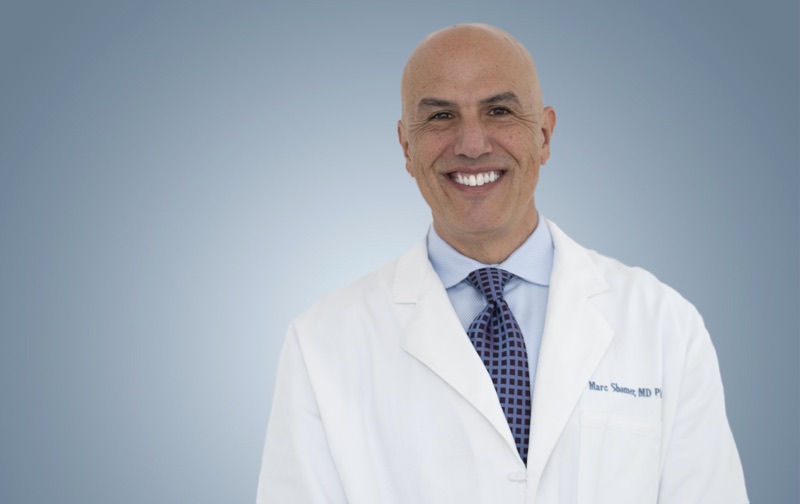
Board-certified ophthalmologist; Adjunct Associate Professor of Ophthalmology, Keck School of Medicine of USC; active California Qualified Medical Evaluator. Full biography · Curriculum vitae
Published August 2, 2026 · Last substantive review August 2, 2026 · Medical reviewer: Marc H. Shomer, MD, PhD, QME
Request a Conflict Check and Case Review
Submit the matter for conflict screening. Please do not send medical records or protected health information until conflicts are cleared and secure transfer instructions are provided.