Vision Requirements for Driving in California: What Attorneys Should Know
California's DMV vision screening standard is 20/40 with both eyes together, 20/40 in one eye, and at least 20/70 in the other, with or without corrective lenses. A driver who fails must have an eye doctor complete form DL 62, and the DMV may not license anyone whose best corrected acuity is 20/200 or worse in the better eye.

These rules matter in collisions where a driver's eyesight is questioned and in injury cases where the injured person can no longer meet a driving standard.
This article is educational and is not legal advice. Attorneys should check current law in their jurisdiction.
The California DMV Vision Screening Standard
The standard appears in California Code of Regulations, title 13, section 20.03, operative April 1, 2025, and on the current DL 62 form. Applicants for an original or renewed license must meet:
- 20/40 with both eyes tested together, and
- 20/40 in one eye, and
- 20/70, at least, in the other eye.
"20/40" is Snellen notation for visual acuity, the sharpness of central vision. The DMV explains that passing means the applicant can read, at 20 feet, letters a young healthy observer can read at 40 feet. See understanding visual acuity.
The legal floor is Vehicle Code section 12805(a)(2): the DMV shall not issue or renew a license for a person "whose best corrected visual acuity is 20/200 or worse in that person's better eye, as verified by an optometrist or ophthalmologist." Section 12804.9(a)(1)(E) requires "a test of the hearing and eyesight of the applicant."
What Happens When a Driver Fails the DMV Eye Test
The first step is a complete eye examination to find out why the driver is not seeing well. The cause may be as simple as an outdated glasses prescription, a treatable condition such as cataract, or a progressive disease such as glaucoma or macular degeneration, and the answer shapes everything that follows.
A failed screening is not automatically a denial. Under 13 CCR 20.03(c), the applicant must:
- Submit a Report of Vision Examination (DL 62) signed by an ophthalmologist or optometrist, based on an examination within six months.
- Pass a vision drive test, which the DMV calls a Supplemental Driving Performance Evaluation.
- Submit to more frequent screenings if the condition is progressive.
The DL 62 asks the eye doctor for refraction, acuity with and without lenses, best corrected acuity, diagnoses (such as cataract, glaucoma, or macular degeneration), whether each condition is static or progressive, visual field extent, severity of glare problems, poor night vision, and contrast sensitivity loss, and whether night driving is recommended.
The DMV's Vision Conditions and Actions Chart treats cataract and decreased peripheral vision as progressive and calls for a drive test when the DL 62 shows a visual field of 20 degrees or less in each eye. A driver who fails and cannot compensate may be suspended or revoked under Vehicle Code section 13953.
Litigation note: the DL 62 states that medical information received by the DMV is confidential under Vehicle Code section 1808.5, so obtaining it typically requires formal process.
The Corrective Lens Restriction
When a driver needs glasses or contact lenses to pass, the license carries a corrective lens restriction. Vehicle Code section 12813 authorizes restrictions "to assure the safe operation of a motor vehicle," and section 14603 provides: "No person shall operate a vehicle in violation of the provisions of a restricted license issued to him."
Bioptic Telescopic Lens Drivers
A bioptic telescope is a small telescope mounted in the upper part of a spectacle lens. The driver looks through the regular "carrier" lens and briefly dips the head to use the telescope for detail, such as a sign.
Vehicle Code section 12805(a)(2) states: "A person shall not use a bioptic telescopic or similar lens to meet the 20/200 visual acuity standards." Best corrected acuity through ordinary lenses must therefore be better than 20/200 in the better eye. The DL 62 also asks for telescope acuity, driving training, and skill with the telescope.
Commercial Drivers: 49 CFR 391.41(b)(10)
Interstate commercial drivers must meet 49 CFR 391.41(b)(10)(i):
"distant visual acuity of at least 20/40 (Snellen) in each eye without corrective lenses or visual acuity separately corrected to 20/40 (Snellen) or better with corrective lenses, distant binocular acuity of at least 20/40 (Snellen) in both eyes with or without corrective lenses, field of vision of at least 70° in the horizontal meridian in each eye, and the ability to recognize the colors of traffic signals and devices showing standard red, green, and amber"
The key difference from the California passenger standard: each eye must reach 20/40 and 70 degrees of horizontal field.
Alternative vision standard. Under 49 CFR 391.44, added by a 2022 rule (87 FR 3417), a driver who fails the acuity or field standard in the worse eye may qualify if an ophthalmologist or optometrist completes Form MCSA-5871 and a medical examiner certifies the driver at least annually. The better eye must have at least 20/40 acuity and 70 degrees of horizontal field, the driver must recognize red, green, and amber, the deficiency must be stable, and enough time must have passed to adapt. First-time qualifiers generally need a road test.
Did the Driver's Vision Contribute to the Crash?
The ophthalmic questions are concrete:
- Legal standard. What was best corrected acuity in each eye near the crash date?
- Correction in use. Was the prescription current, and was it worn? Was monovision (one eye set for distance, one for near) in use?
- Progressive disease. Did cataract, glaucoma, macular degeneration, or diabetic retinopathy progress after the last exam? Cataract can cause glare and night vision problems out of proportion to the eye chart.
- Visual fields. Did glaucoma, stroke, or optic nerve disease narrow peripheral vision? See understanding visual fields.
- Medications. Were the pupils dilated that day, or were pupil-constricting drops dimming night vision? Were sedating drugs in use?
- Warnings. Did any provider advise against night driving or driving at all?
Office acuity on a high contrast chart is not the same as seeing a dark-clothed pedestrian at night. The analysis ties documented findings to the lighting, glare, and timing of the event, often alongside a reconstruction or human factors expert.
When an Eye Injury Ends or Restricts Driving
In injury cases the question reverses: can the injured person still meet a driving standard?
- Loss of one eye fails California's 20/70 "other eye" requirement, so the person needs a DL 62 and a drive test, although the DMV chart allows licensure for stable monocular vision if the drive test is passed.
- An interstate commercial driver with the same injury fails 391.41(b)(10)(i). Requalifying under 391.44 requires stability, adaptation time, annual certification, and often a road test, which can mean months off work.
These consequences bear on lost earning capacity. See ocular trauma, loss of vision after trauma, and motor vehicle accident eye injuries.
Records Attorneys Should Gather
- Complete records from every ophthalmologist and optometrist for several years before the event.
- Refraction, glasses, and contact lens prescription history.
- Visual field printouts and OCT scans in native format.
- DL 62 forms, DMV medical correspondence, and the driver record.
- For commercial drivers: Medical Examination Reports, medical certificates, and any Form MCSA-5871.
- Pharmacy records, the police report, and evidence of glasses at the scene.
From the Expert
"I start with the eye records closest to the crash date and work backward. I want to know what the driver could actually see in each eye, under the conditions at that moment, and what the treating doctors documented and advised. A 20/40 office chart does not end the analysis if the patient had a dense cataract and the collision happened at night facing oncoming headlights. The visual field is just as important: a driver with 20/20 acuity but a narrowed field from glaucoma, stroke, or optic nerve disease can miss a car or pedestrian approaching from the side. In injury cases I measure exactly what the person can and cannot do and tie it to the standard that governs their license."
Frequently Asked Questions
What vision do you need to drive in California?
The DMV screening standard is 20/40 with both eyes together, 20/40 in one eye, and at least 20/70 in the other, with or without corrective lenses. A person who fails may still be licensed after a DL 62 and a drive test, but not if best corrected acuity is 20/200 or worse in the better eye.
What is the California DMV DL 62?
It is the Report of Vision Examination an ophthalmologist or optometrist completes when a driver fails the DMV screening. It reports acuity, diagnoses, prognosis, visual fields, and functional problems such as glare, from an exam within six months.
What is a corrective lens restriction?
A license restriction requiring glasses or contacts while driving. Vehicle Code section 14603 prohibits driving in violation of a license restriction.
Can someone with one eye drive in California?
Often yes. A monocular driver needs a DL 62 and a drive test, and under the DMV chart a license may issue if the test is passed.
What are the federal vision requirements for commercial drivers?
Under 49 CFR 391.41(b)(10), 20/40 in each eye and both eyes together, 70 degrees of horizontal field in each eye, and recognition of red, green, and amber. Drivers who fail in the worse eye may qualify under 49 CFR 391.44.
Can an ophthalmologist determine whether poor vision caused a crash?
An ophthalmologist can establish what the driver could see, in each eye and under the relevant conditions. Causation is usually answered together with reconstruction and human factors evidence.
Authorities Cited
Primary sources referenced on this page. Links open the official text on the publishing agency’s site.
Request a Case Review
If a driver's vision, or an injured person's ability to keep driving, is at issue, Dr. Shomer can review the records and explain what the ophthalmic evidence supports. He consults nationwide, examines in California and Nevada, and has been retained by both plaintiffs and defendants. Request a conflict check and case review, or read how to retain an ophthalmology expert and about our independent medical examinations.
Educational information only. This page provides general information for attorneys and other medical-legal professionals. It is not medical or legal advice, does not address any particular case, and does not create a physician-patient, attorney-client, or expert-client relationship. Opinions in any matter are formed only after review of the specific records, examination findings, and applicable literature. Past engagements do not guarantee any result.
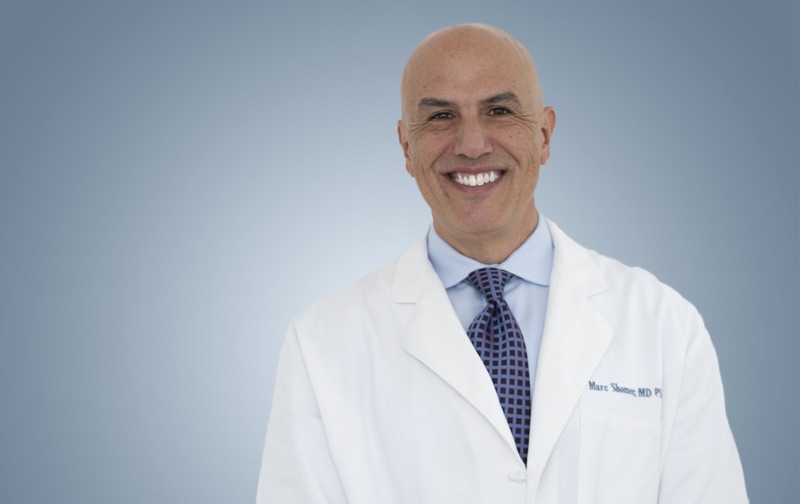
Marc H. Shomer, MD, PhD, QME, is board certified by the American Board of Ophthalmology (certified 2011, recertified 2021), a California Qualified Medical Evaluator, and an Adjunct Associate Professor of Ophthalmology at the Keck School of Medicine of USC (faculty since 2009). He has performed more than 20,000 eye surgical procedures and is licensed in California and Nevada. Full biography · Curriculum vitae
Published October 12, 2026 · Last substantive review October 12, 2026 · Medical reviewer: Marc H. Shomer, MD, PhD, QME
Request a Conflict Check and Case Review
Submit the matter for conflict screening. Please do not send medical records or protected health information until conflicts are cleared and secure transfer instructions are provided.